
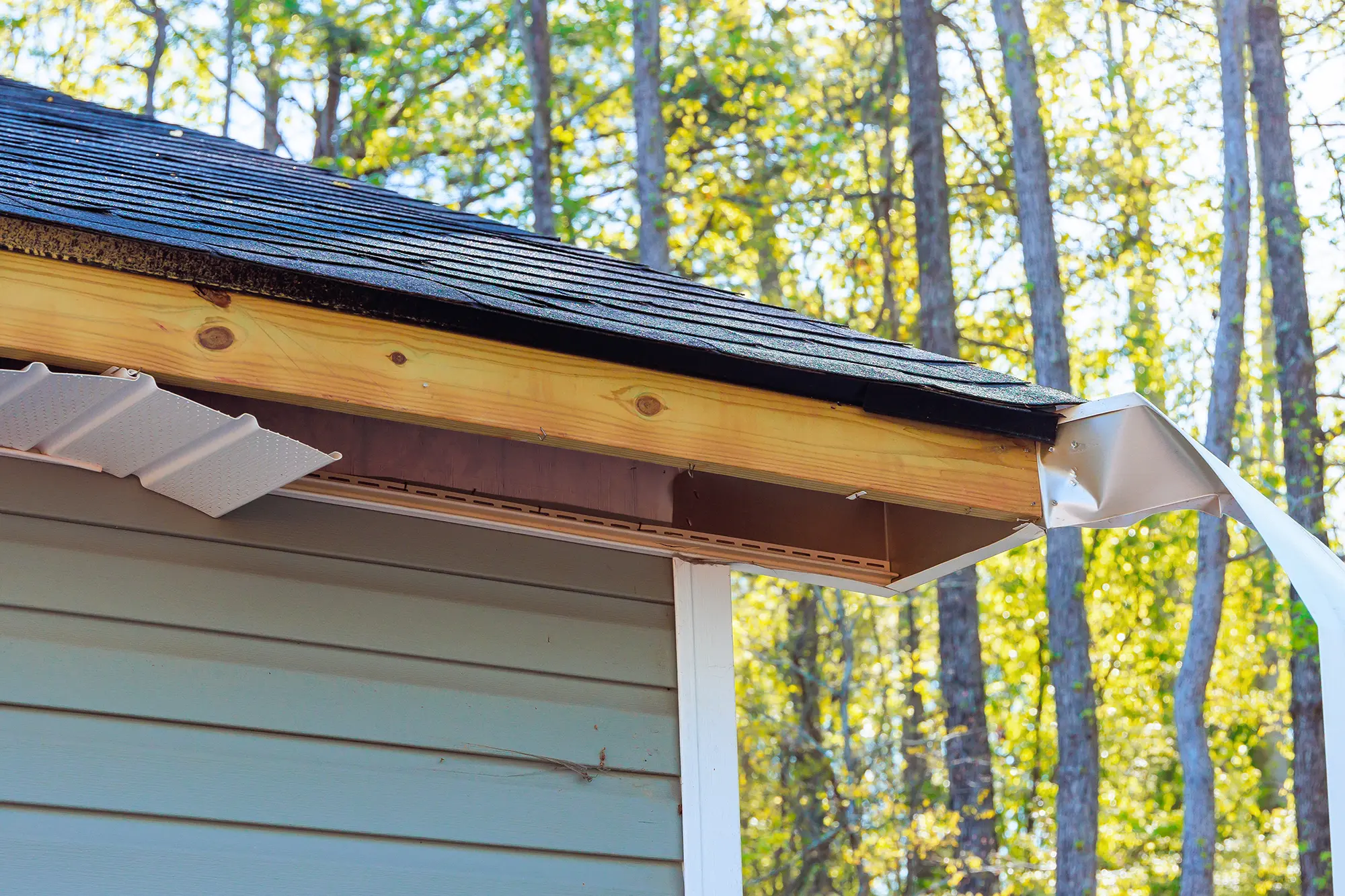
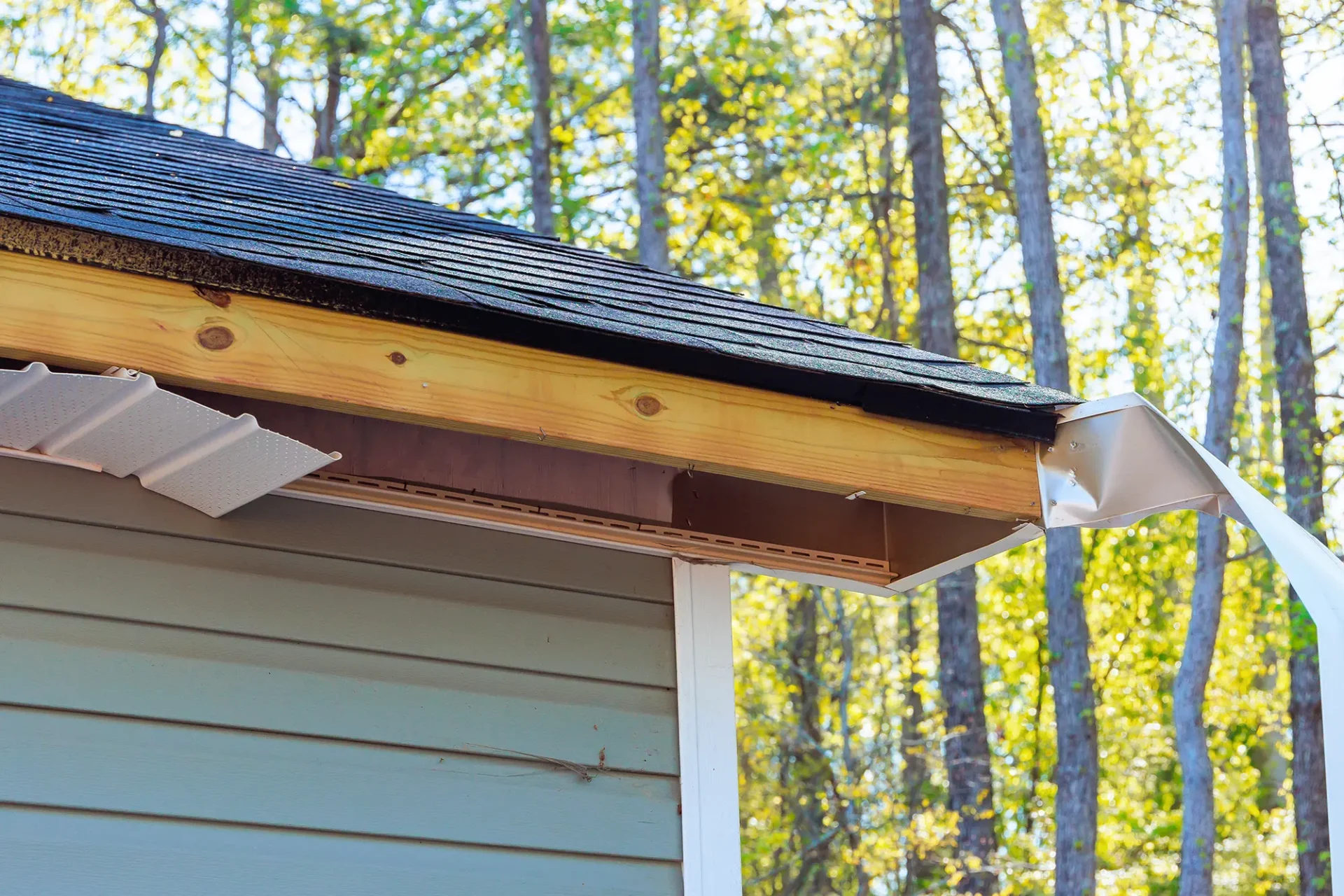
After a Houston storm, a gutter packed with leaves and a gutter the wind has pulled loose can look almost identical from the driveway. Telling them apart decides whether you are booking a cleaning or starting a conversation with your insurer, and the order you check things in matters more than most people expect, because a couple of the obvious first moves make the second outcome harder.
I would check my own house in this order, with safety and photographs before any cleaning and the call on damage left until the gutters are clear.
Safety comes before anyone looks up
The National Weather Service office for Houston defines a severe thunderstorm as one producing damaging wind gusts above 58 mph or hail one inch in diameter or larger, and it notes that downburst damage is far more common in southeast Texas than tornado damage (NWS Houston/Galveston). Those straight-line winds are what pull gutters off the fascia, and they can bring service lines down in the same event.
On most houses the electrical service drop arrives at roof height, often within a few feet of a gutter run or a downspout. OSHA’s disaster cleanup guidance is to assume that all power lines are live or energized and to stay at least 10 feet from any downed line (OSHA). If a line is sagging toward the gutter or lying across the yard, call the utility and leave the gutter alone until they have been out.
Ladders are the second hazard, because the ground is soft after heavy rain and a damaged gutter is the worst thing on the house to lean against. The General Services Administration’s own maintenance procedure tells crews not to rest ladders on sheet metal gutters at all (US General Services Administration). Use a stabilizer that bears on the roof or the wall, or wait until someone with the right equipment can get to it.
Photograph everything before you touch it
Cleanup destroys evidence, so documentation has to come first. The National Weather Service’s hurricane and severe weather guide for southeast Texas tells residents to photograph or videotape damaged structures and all damaged property, and not to throw out damaged property before the adjuster has inspected it unless it is a health hazard or gets in the way of local cleanup (NWS Houston/Galveston Hurricane and Severe Weather Guide). The Texas Department of Insurance gives the same advice for hail claims and tells homeowners to prevent further damage, noting that the policy may pay for temporary repairs (Texas Department of Insurance).
In practice that means:
- photograph before anything is moved
- keep bent sections and fallen hangers in the garage until the adjuster has seen them
- make only the temporary repairs that stop water getting into the house
- speak to your insurer before anything permanent happens
Whether temporary repairs are covered depends on your policy, so check it before you pay for one.
The photographs worth taking are:
- each elevation from the ground, wide enough to show where the gutter sits against the roof edge
- close-ups of any dents, with a coin in frame for scale
- every joint, mitered corner and end cap, especially any seam that has opened
- the fascia board behind any section that has pulled away
- each downspout at the top elbow and at the ground
Clear the debris first, then judge the damage
A gutter carrying a storm’s worth of wet leaves and twigs is heavy, and weight alone can make a sound gutter sag and overflow. Clear it and run water through it, and a gutter that was only overloaded settles back to where it was. A damaged one stays bent or stays pulled out, or it keeps holding water in the same low spot after the trough is empty.
That clean-first test is the most reliable way to separate the two, and it is the step people skip when they look up from the lawn and assume the worst. Water that still pools in one section once the trough is clear usually points to a sagging or broken hanger at that spot.
GSA’s inspection procedure calls for an inspection after each exposure to unusually severe weather, and it warns that by the time a gutter has failed, damage has often spread and repairs will probably be expensive. The conditions it lists are the findings that turn a cleaning into a repair:
- gutters that are split or cracked
- hangers that are loose, broken or out of place
- fasteners pulling out
- broken joints or seams
What wind damage looks like
The Department of Energy’s Building America guidance notes that the greatest stress roof assemblies experience in high winds is at the roof edges, and that most roof covering blow-off happens there (US Department of Energy, Building America Solution Center). Gutters are fastened along that same edge, so a run pulled away from the fascia tells you the edge took real load, and the shingles and drip edge directly above it deserve a look as well.
The wind signs on the gutter itself are:
- a visible gap between the back of the gutter and the fascia
- hangers bent, missing, or pulled out with the screw still attached
- mitered corners or end caps split open
- downspouts detached from their wall straps or separated at an elbow
What hail damage looks like
Hail leaves two marks on gutters and downspouts: dents, and small bright spots where the oxidation or coating has been knocked off the metal. The Insurance Institute for Business and Home Safety’s guide for roof damage investigators lists missing, loose or deformed gutters and downspouts as signs of wind damage. Its hail section, written for roofs generally, tells investigators to record dents by size and direction and to look for spatter marks where the oxidation film or coating has been removed (IBHS).
Soft metal shows hail clearly, so gutters and downspouts are among the first things an adjuster looks at. A row of fresh dents is a good reason to get the roof inspected properly. Dents on a gutter do not prove the roof is damaged, though, and anyone at your door telling you otherwise has something to sell.
Look hardest at the side of the house that faced the storm, which usually takes the worst of wind-driven hail. Compare any dents there with older ones elsewhere on the house, so you can show the adjuster which marks are new.
Dents matter for the gutter’s own job as well. A dent in the bottom of the trough holds water, and a crushed downspout restricts flow at exactly the point where a Houston downpour needs it most.
Downspouts and the ground end
Downspouts fail more quietly than gutters, and the evidence usually shows up at ground level. After a storm, run a garden hose into the top of each one, or watch them through the next steady rain, and check these points:
- the top elbow, where leaves and twigs wedge first
- the wall straps, which can pull loose when a full downspout swings in the wind
- the outlet, where a crushed elbow or a knocked-off extension sends water straight against the slab
If a downspout feeds an underground drain, water bubbling back out of the top of the buried pipe during steady rain means the underground section is blocked. That is a separate job from the gutter, and clearing it usually takes a drain jetter. A downspout that empties against the foundation instead of a few feet out into the yard is worth correcting while you are there, because the next storm will put all of that roof water against the slab.
Repair or replace
A single pulled hanger or an opened seam is a simple repair. A run with several failed hangers, soft fascia behind it and dents along the bottom is usually better replaced, because each patch ends up fastened to a structure that is already weakened.
The age of the system matters as much as the storm damage. HUD’s useful-life table for capital needs assessments gives aluminum gutters and downspouts 20 years and copper 50 years (US Department of Housing and Urban Development). Those are planning figures, and if an aluminum system is close to 20 years old and has storm damage on top, paying to patch it once and then again in a few years rarely makes sense.
If you are replacing in a part of town that gets hail, IBHS recommends upgrading vinyl and aluminum gutters and downspouts to more durable steel options to better withstand hail (IBHS Thunderstorm Ready). Steel costs more, and its coating needs looking after.
As a rough guide, these usually mean a repair:
- one or two loose or broken hangers
- a single opened seam or end cap
- a downspout off its straps with no crush damage
And these usually mean replacement:
- a run pulled away along most of its length
- soft or rotten fascia behind the gutter
- dents along the bottom of the trough that hold water after cleaning
- a system already close to the end of its useful life
Choosing who does the work
Storms bring out door-knockers, and the Texas Department of Insurance’s storm fraud guidance is worth reading before anyone gets a signature (Texas Department of Insurance). The points that matter most for gutter work are:
- it is illegal in Texas for a contractor to offer to waive your deductible or promise a rebate for it
- never pay in full up front, and be wary of anyone asking for a large down payment
- get bids in writing
I would also ask any contractor to show you the damage in photographs before anything is removed, and keep copies for the claim.
TDI’s hail claim advice adds that you should not throw away damaged items until your insurance company gives permission, which is another reason to keep those bent sections in the garage until the adjuster has been.
When to check in Houston
The National Weather Service notes that severe thunderstorms here are most common in spring but can occur almost any time of year in southeast Texas, and its hurricane guide puts the peak threat to the Texas coast in August and September. Those two windows are when a post-storm gutter check is most worth doing, and the spring one usually arrives on top of the heaviest leaf and catkin load of the year from the oaks.
Going into each window with clear gutters makes the assessment afterward much easier. A gutter already half full of oak debris will sag and overflow in a storm that a clean one would handle, and afterward you cannot tell what the wind did from what the debris did.
If you would rather not climb onto wet ground after a storm, our gutter cleaning visits after severe weather follow the order above: clear and flush first, then report what is actually damaged, with photographs you can hand to your insurer. Storm runoff tends to leave streaks down the siding below an overflowing run, which is a house washing job once the gutter itself is sorted, and the debris that comes down usually stains the driveway beneath it, which pressure washing takes care of in the same visit.
__________________________________________________
References
- NOAA National Weather Service Houston/Galveston, Spring Weather Safety Campaign: Thunderstorms, https://www.weather.gov/hgx/severe_weather_awareness_thunderstorm
- OSHA, Keeping Workers Safe during Disaster Cleanup and Recovery (Fact Sheet 3698), https://www.osha.gov/sites/default/files/publications/OSHA_FS-3698.pdf
- US General Services Administration, General Inspection and Maintenance of Gutters and Downspouts, https://gsa.gov/real-estate/historic-preservation/historic-preservation-policy-tools/preservation-tools-resources/technical-procedures/general-inspection-and-maintenance-of-gutters-and-downspouts
- NOAA National Weather Service Houston/Galveston, 2025 Southeast Texas Hurricane and Severe Weather Guide, https://www.weather.gov/media/hgx/hurricanes/2025HurricaneGuide/HGX%20HG2025_English.pdf
- Texas Department of Insurance, Hail damage? Tips to file an insurance claim, https://www.tdi.texas.gov/column/hail-damage-tips-to-file-an-insurance-claim.html
- US Department of Energy, Building America Solution Center, Roof Edge Protection, https://basc.pnnl.gov/resource-guides/roof-edge-protection
- Insurance Institute for Business and Home Safety, RICOWI Roof Guide: Survey Practices, https://ibhs.org/guidance/ricowi-roof-guide-survey-practices/
- US Department of Housing and Urban Development, CNA e-Tool Estimated Useful Life Table, https://www.hud.gov/sites/documents/eul_for_cna_e_tool.pdf
- Insurance Institute for Business and Home Safety, Prep homes, businesses now for severe spring weather with IBHS Thunderstorm Ready guides, https://ibhs.org/ibhs-news-releases/thunderstorm-ready/
- Texas Department of Insurance, Fraud resources, https://www.tdi.texas.gov/consumer/storms/fraud-resources.html


